


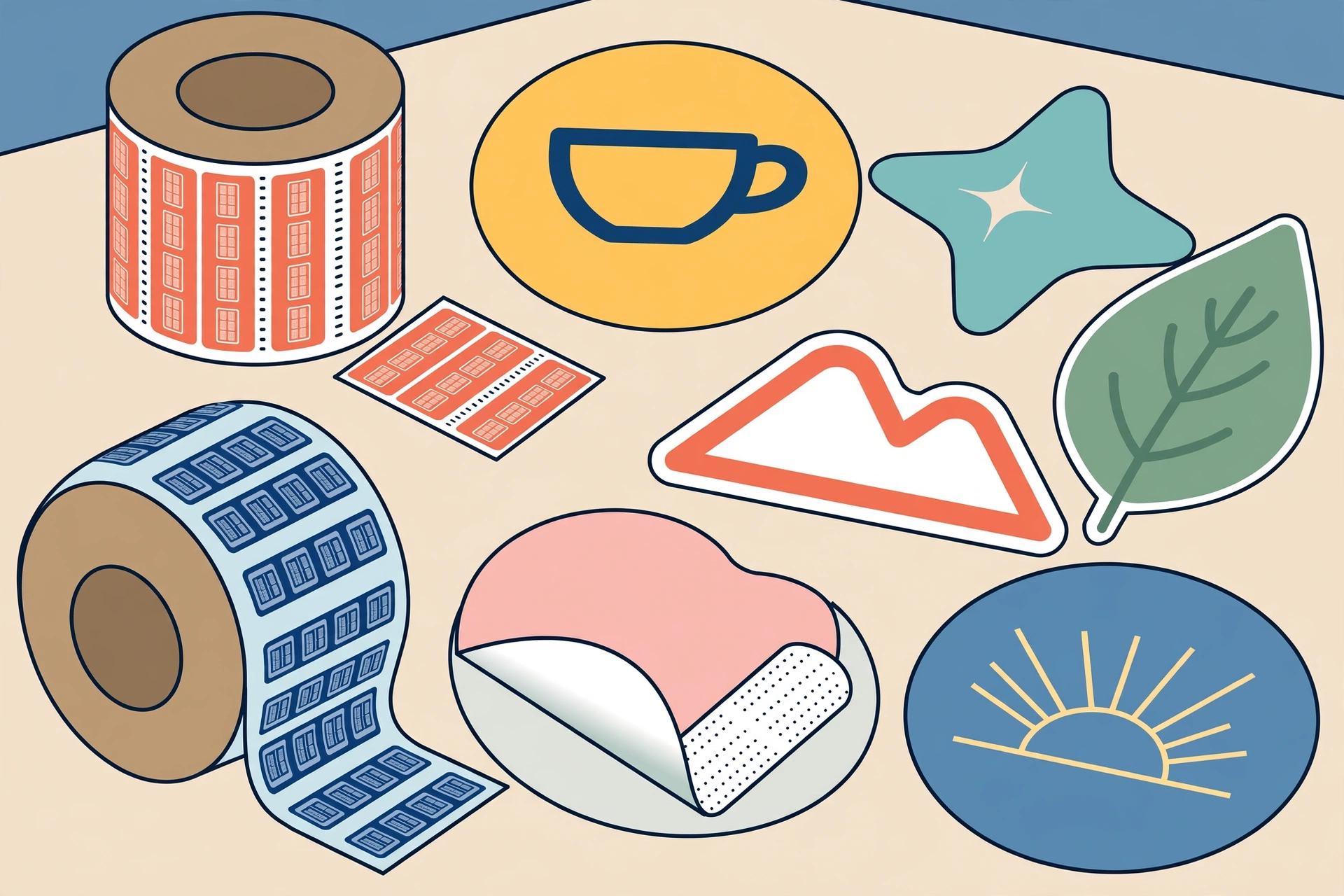
People say stickers and labels like they are the same thing, and in casual conversation, fine. But walk into a print shop and use the wrong word, and you might end up with a product that peels off in the rain, or pay for durability you never needed. A customer came in last month asking for "labels" for his food truck. What he actually wanted was vinyl stickers for the truck windows. Different product, different material, different price. Five minutes of the right questions saved him from ordering the wrong thing.
Here is how printers actually think about custom stickers vs labels, what decals are (the third term nobody explains), and how to make sure you order the right one the first time.
The One-Sentence Answer
The difference is purpose, not just the product. Labels identify, inform, or organize: think product labels, shipping labels, ingredient labels. Stickers promote, decorate, or build awareness: think laptop stickers, bumper stickers, event handouts. Same sticky concept, completely different jobs.
What "Stickers" Means at a Print Shop
Stickers are the promotional kind. Laptop stickers, die-cut decals handed out at events, bumper stickers, water bottle stickers, hard hat stickers. They are usually thicker, often vinyl, cut to the custom shape of your design, and made to be noticed and kept.
Stickers are typically handed out individually or sold as singles. The classic use case is brand promotion: a coffee shop hands out logo stickers, customers put them on laptops, and suddenly the logo is traveling all over town. Stickers are marketing that sticks, literally.
What "Labels" Means at a Print Shop
Labels are the working kind. Product labels on jars and bottles, shipping labels, price tags, warning labels, barcode labels. They get applied to a container or package as part of doing business, and they usually arrive on rolls or sheets so you can peel and apply them fast, hundreds at a time.
The classic use case is packaging. A candle maker needs a clean label on every jar. A bakery needs ingredient labels. A warehouse needs barcodes that scan every single time. Labels are about function first, though a well-designed one looks beautiful too.
And What About Decals?
Here is the term most guides skip. Decals are the large-format cousins: graphics meant for windows, walls, vehicles, and floors. They are usually bigger than stickers, often applied with transfer tape for precise placement of intricate designs, and built for semi-permanent installation rather than handouts.
Quick way to keep the three straight:
| Stickers | Labels | Decals | |
|---|---|---|---|
| Main job | Promote and decorate | Identify and inform | Brand surfaces |
| Typical size | Small to medium | Small, standardized | Medium to large |
| How they arrive | Individually cut | Rolls or sheets | Often with transfer tape |
| Goes on | Laptops, bottles, gear | Products, packages | Windows, walls, vehicles |
If someone at the counter asks whether you want a decal, they are asking about a bigger, more permanent application. Now you know.
Materials Cheat Sheet
The material matters more than the name on the order form. Here are the main options in plain English:
Paper. The most affordable. Great for indoor use, shipping labels, price tags, and anything short term. Beautiful print quality. The downside is obvious: paper and moisture do not mix. One rainstorm, one sweaty cold bottle, and a paper label is done.
Vinyl. The durable workhorse. Waterproof, UV resistant, tough enough for outdoor use, vehicles, and equipment. Vinyl stickers typically last years outside. Costs more than paper, but for anything exposed to the elements, it is the answer.
BOPP (biaxially oriented polypropylene). The premium product-label film. Thin, with a high-end look on jars, bottles, and cosmetics. Resists water and oils, which is why it dominates store shelves. If your product sits next to competitors, BOPP is worth the step up.
A quick truth about the word "waterproof": vinyl is genuinely waterproof. BOPP is highly water resistant. Paper is not, no matter what anyone tells you. Match the material to the worst conditions your product will face, not the average ones.
Kiss-Cut vs Die-Cut, Explained Simply
You will hear these two terms when ordering stickers, and the difference is practical:
Die-cut means each sticker is cut completely through, backing and all, into the exact shape of your design. You get individual stickers in fun custom outlines. This is the classic laptop sticker.
Kiss-cut means only the sticker layer is cut, leaving the backing intact, usually in a sheet or with a border around each sticker. Kiss-cut stickers peel off easily and the backing protects them until use. Many shops prefer kiss-cut for easier handling.
Neither is better in general. Die-cut looks sharper as a standalone piece. Kiss-cut is easier to peel and ship. Your printer will recommend based on your design and quantity.
5 Questions That Pick the Right One for You
Answer these and the choice makes itself:
1. What is it for? Promotion and giveaways point to stickers. Product packaging, shipping, or compliance point to labels.
2. Where will it live? Indoors and dry: paper is fine and cheap. Outdoors, wet, or handled constantly: vinyl. Refrigerated or oily: BOPP or vinyl, because condensation destroys paper labels.
3. How many do you need? A hundred for an event: individually cut stickers. Labels on rolls, where the per-piece cost drops dramatically.
4. How fast must they go on? Handing them out one by one: stickers. Labeling 500 jars in an afternoon: rolls, no contest.
5. Does it need to come off cleanly? Most adhesives are permanent by default. If the sticker needs to remove without residue later, say so upfront. Removable adhesives exist, but the printer has to know.
What to Tell Your Printer
Here is the checklist that gets you the right recommendation in one conversation:
- What is going on, and what is it sticking to? (jar, box, car window, laptop)
- The worst conditions it will face (rain, fridge, direct sun, car wash)
- Quantity, or at least a rough range
- Whether it needs to peel off cleanly later
- Your timeline
Even better: bring the actual item. Bring the jar, the bottle, the box. A good shop will test materials on it and show you how each option looks and feels in real life. That five-minute test beats a week of guessing from a screen.
Frequently Asked Questions
What is the difference between a sticker and a label?
Purpose. Labels identify, inform, or organize, like product labels and shipping labels, and usually come on rolls or sheets. Stickers promote or decorate, like laptop and bumper stickers, and are usually individually cut pieces. Describe your use case to your printer and they will match the right product.
Are vinyl stickers waterproof?
Yes. Vinyl stickers are waterproof and UV resistant, which is why they are the standard for outdoor use, vehicles, and water bottles. They typically last years outdoors.
Can stickers be used as product labels?
They can, and many small businesses start exactly this way: a vinyl die-cut sticker on a jar works fine. But once volume grows, labels on rolls become far cheaper and faster to apply. Start with stickers to test, switch to roll labels to scale.
Do stickers leave residue when removed?
Standard permanent adhesives can leave some residue, especially after long sun exposure. If clean removal matters, ask for a removable adhesive. It exists for exactly this reason, but you have to request it.
Which is cheaper, stickers or labels?
For small runs, individually cut stickers are practical and affordable. For high-volume packaging, roll labels win by a wide margin on per-piece cost. The crossover point depends on your quantities, so get both quoted if you are on the fence.
Bring Us the Jar
Seriously. Bring the product, the box, or the bottle, and we will put real materials on it so you can see and feel the difference before you order. Print N Ship 4u in Katy, TX prints custom stickers, labels, and decals for businesses of every size, from a hundred event stickers to full product label runs. Call (281) 375-9714 or stop by the shop and let's get it right the first time.