


You are filling out a quote form for custom shirts. The dropdown asks: screen printing, embroidery, or DTF. You know the first two. DTF? No idea. You are not alone. Half the people who walk into our shop in Katy ask us the exact same question, usually while pointing at the word on their phone screen.
So what is DTF printing, in plain English? It is a way to put full-color designs on shirts without screens, without weeding vinyl, and without minimum orders. This guide explains how it works, where it shines, where it does not, and the one decision most buyers get wrong: whether to buy the equipment or just use a print shop.
DTF Printing in 30 Seconds
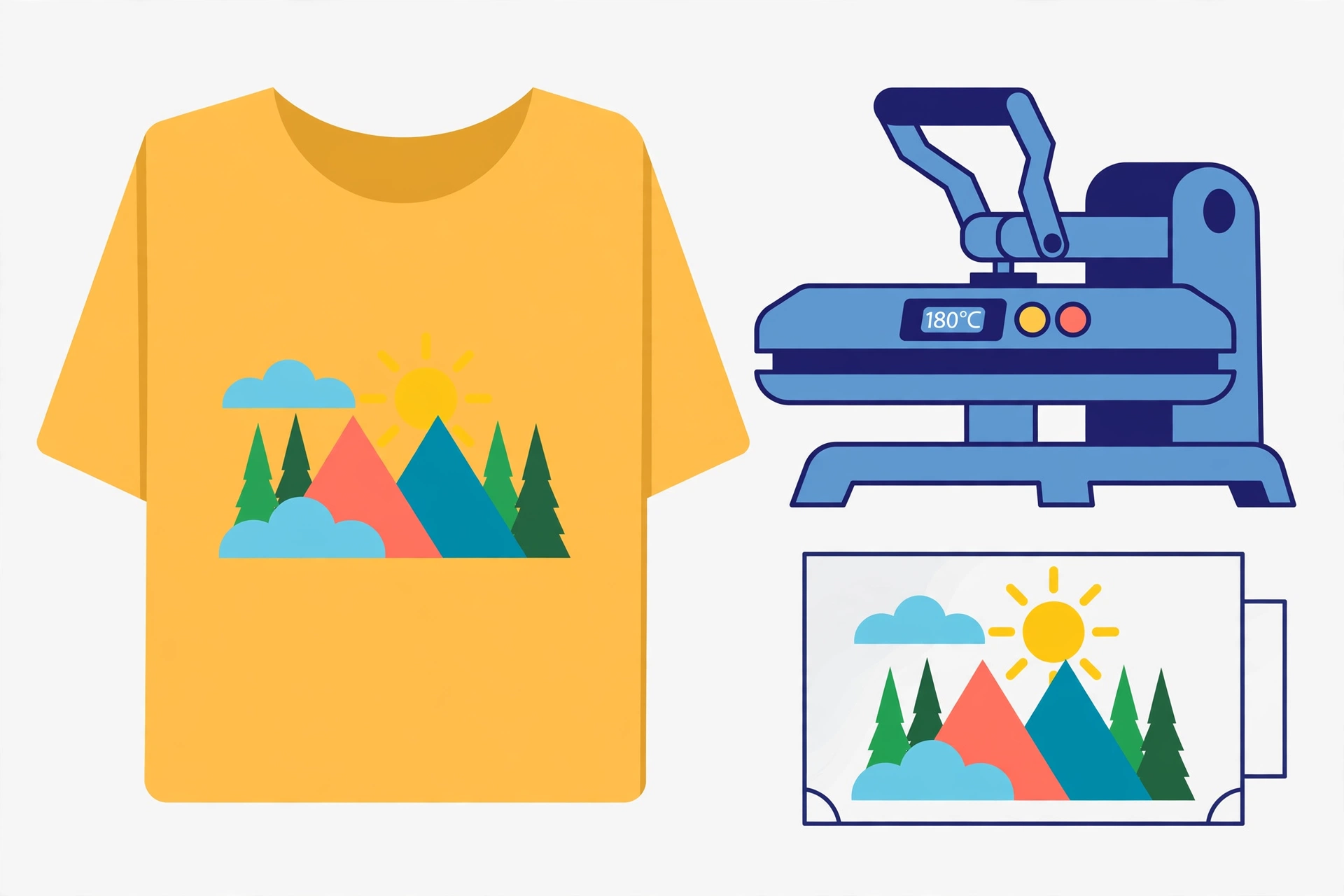
DTF stands for direct to film. Your design is printed onto a special clear PET film using water-based inks, including a white ink layer behind the colors. A powdered adhesive is applied while the ink is wet, then cured with heat. The finished transfer is heat pressed onto the garment, the film is peeled away, and the design stays bonded to the fabric.
The result: a full-color print that works on cotton, polyester, blends, and plenty of other fabrics, with no minimum order. One shirt or one hundred, the process is the same.
How DTF Printing Works, Step by Step
Printing the design onto PET film
It starts with your artwork. The design is printed in reverse onto a clear PET film using CMYK inks plus white. That white layer matters more than anything else in the process. It sits behind your colors and acts like a primer, which is what lets bright, full-color designs show up on dark shirts. Without it, your colors would sink into a black shirt and disappear.
Powder adhesive and curing
While the ink is still wet, a fine hot-melt adhesive powder is dusted over the print. The excess gets shaken off, and the film goes through heat to cure the powder into a smooth, even adhesive layer. At this point the transfer is finished. It can be pressed immediately or stored and pressed later, which is why shops can keep gang sheets on hand.
The heat press transfer
The transfer goes face down on the garment and into a heat press for a short press at high temperature and firm pressure. After pressing, the film gets peeled away. Some films are hot peel (peel right away), some are cold peel (wait until it cools). A good shop knows which film they are running and follows it with a second short press to lock the print in. That second press is a small step that separates quality work from prints that start peeling in month two.
What Makes DTF Different From Other Methods
DTF vs screen printing
Screen printing pushes ink through a mesh screen, one screen per color. It is unbeatable for large runs of simple designs: soft feel, low cost per shirt at volume. But every color needs its own screen and setup, so a ten-color design or an order of twelve shirts gets expensive fast. DTF has no screens and no per-color pricing, so full-color artwork and small quantities are its home turf.
DTF vs DTG (direct to garment)
DTG prints ink directly onto the shirt, like a giant inkjet for fabric. It gives a beautifully soft print but usually needs the garment pre-treated with a spray, works best on cotton, and slows down on dark shirts. DTF skips the pre-treatment step entirely and handles dark garments and poly blends far more happily.
DTF vs sublimation
Sublimation dyes polyester fibers themselves, so the print literally becomes part of the fabric. It is gorgeous on white polyester but it cannot print white ink, which means dark shirts are out and cotton is mostly out. DTF prints on nearly anything because it bonds to the surface instead of dyeing the fibers.
The Honest Pros and Cons
Where DTF wins
Full color with zero color limits. Gradients, photos, watercolor effects, tiny detail, a logo with twelve colors: DTF prints it all in one pass. Screen printing would charge you per color for the same design.
Almost any fabric. Cotton, polyester, blends, fleece, canvas, denim, nylon. If your team wants the same design on cotton tees and poly polos, DTF handles both without breaking a sweat.
No minimums. No screens to burn means no setup cost to spread across the order. One shirt costs roughly the same per-shirt effort as fifty, which makes DTF perfect for small runs, replacements, and one-off gifts.
Sharp detail. Small text and fine lines usually come out clean, which is great for detailed logos that would need simplifying for embroidery.
Where DTF falls short
You can feel it. A DTF print is a thin layer sitting on top of the fabric. A small chest logo? You will barely notice. A giant solid rectangle across the back? It can feel a bit plasticky and less breathable than a screen print, where ink soaks into the fibers. Designs with open space feel much better than big solid blocks.
It is not embroidery. Up close, DTF reads as a print. For a premium polo or jacket where you want that raised, textured look, embroidery still wins on perceived quality.
Wash care matters. A properly pressed DTF print typically survives many dozens of washes, but it is fussier than embroidery about hot dryers and harsh detergents. Wash inside out, cold water, low heat, and it will last.
Structured hats are tricky. DTF needs a flat heat press, so curved structured caps do not take it well. Flat-brim or unstructured styles can work, but most shops will steer hat orders toward embroidery.
Should You Buy a DTF Printer or Just Use a Print Shop?
This is the question the crafter blogs never answer honestly, because most of them sell printers or transfers. Here is the real math.
A workable DTF setup means the printer itself, DTF inks, PET film, adhesive powder, a curing method, RIP software for color management, a quality heat press, and somewhere to put all of it with ventilation. Then comes the learning curve: dialing in press time and temperature for different fabrics, dealing with clogged white-ink lines, and ruining a stack of shirts while you learn. For a business printing shirts every week, that investment can pay off. For a one-time order of twenty reunion shirts, it is wildly impractical.
The middle ground most small businesses love is the gang sheet. That is a single large transfer sheet filled with multiple designs, names, or sizes nested together to use every inch of film. You pay for the sheet, not per design, so ten different names for a team or a mix of logo sizes for youth and adult shirts all ride on one sheet. Ask your print shop about gang sheets before you assume you need separate setups for every variation. It is the single best cost saver in custom apparel that most first-time buyers have never heard of.
When DTF Goes Wrong: What Causes It
Most DTF failures trace back to three things, and knowing them helps you judge a shop's quality:
Peeling or lifting edges usually means the press time, temperature, or pressure was off, or the second finishing press got skipped. This is the most common corner-cutting in cheap DTF work.
Cracking shows up when prints get abused in the wash: hot dryers, bleach, aggressive cycles. Some cracking over a long life is normal wear. Cracking in the first month is a pressing problem.
A stiff, heavy feel happens with oversized solid designs or too much adhesive. A good shop will warn you when your artwork would feel better as a smaller print or a different method entirely. If a shop never pushes back on your file, that is a red flag, not good service.
How to Send Artwork That Prints Well
Your print is only as good as your file:
- Send a PNG with a transparent background, not a photo of your logo on a white square
- Aim for 300 DPI at the actual print size you want
- Keep small text and fine details away from the very edge of the design
- Vector files (AI, EPS, PDF) are ideal since they scale to any size cleanly
No print-ready file? Most shops can clean up or rebuild artwork for a small design fee. Worth every penny. The difference between a crisp file and a blurry one is the difference between a shirt you love and one that looks homemade.
Frequently Asked Questions
How long does DTF printing last on a shirt?
A properly pressed DTF print typically lasts through many dozens of wash cycles, often as long as the shirt itself. Wash inside out in cold water and tumble dry low or hang dry to get the most life out of it.
Does DTF printing wash off or crack?
Not when it is done right. Washing off or early cracking almost always points to incorrect press settings or skipped finishing steps. With correct application and reasonable wash care, the print stays put.
Is DTF better than sublimation?
They solve different problems. Sublimation is beautiful on light-colored polyester because the ink dyes the fabric itself, but it cannot print on dark shirts or cotton. DTF works on nearly any fabric and any color. For a mixed order of cotton and poly shirts, DTF is the practical choice.
Can you put DTF on hats?
Structured baseball caps are difficult because DTF needs a flat heat press and caps are curved. Most shops recommend embroidery for structured hats. Unstructured, flat styles can sometimes take DTF, so ask your shop about your specific hat.
What does DTF stand for?
Direct to film. The name describes the process: the design is printed directly onto a film first, then transferred to the garment, rather than printed straight onto the fabric.
Bring Us Your Design
If you have a colorful logo, detailed artwork, or just need a handful of shirts done right, DTF might be exactly what you are looking for. Bring your file to Print N Ship 4u in Katy, TX, and we will tell you straight whether DTF, screen printing, or embroidery fits your project best, including whether a gang sheet could save you money. Call (281) 375-9714 or stop by the shop and let's look at your design together.